

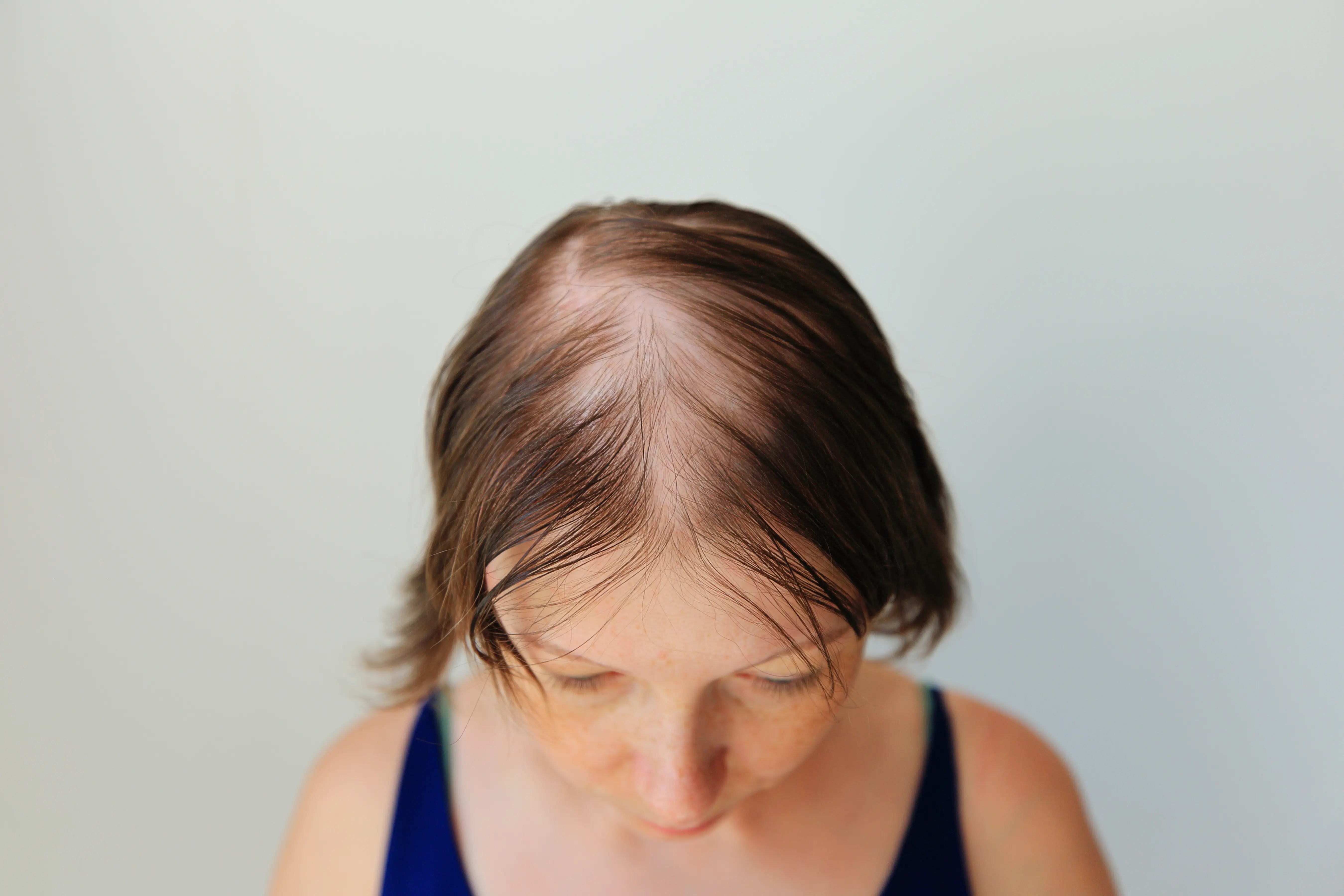
Hair thinning affects millions of men and women, often beginning long before noticeable shedding or scalp visibility appears. While many people assume hair loss is purely genetic, the reality is far more complex. Understanding why hair thinning happens is the first step toward finding a treatment plan that actually works — and to seeing real, long-term results.
Below, we’ll break down the science behind hair thinning, the most common triggers, and how to recognize when it’s time to seek professional support.
To understand hair thinning, it helps to know how hair grows. Each strand follows a natural cycle made up of three primary phases:
This is the longest phase, lasting 2–7 years. Hair grows approximately half an inch per month during this period. Healthy follicles remain in anagen roughly 85–90% of the time.
A short phase lasting 2–3 weeks where hair stops growing and detaches from the blood supply.
Lasting about 3 months, this is when “old” hair sits dormant before naturally shedding. Shedding 50–100 hairs per day is normal — but disruption to this cycle can cause many more hairs to enter telogen at once, leading to noticeable thinning.
When a trigger affects the hair growth cycle, more follicles prematurely enter the resting phase, resulting in increased shedding, reduced density, and slower regrowth.
Hair thinning rarely has just one cause. In many cases, it’s the result of multiple factors occurring simultaneously. Here are the most common root causes:
The most common type of hair loss in both men and women is hereditary thinning. Genetics influence follicle sensitivity to DHT (dihydrotestosterone), a hormone that gradually shrinks hair follicles and shortens the growth phase.
This results in finer, shorter, weaker strands over time. Early intervention is crucial because follicles can become dormant if left untreated too long.
Chronic stress can trigger a condition called telogen effluvium, where a large number of hairs abruptly shift into the shedding phase.
Stress can also impact digestion, nutrient absorption, hormones, and inflammation — all of which play a role in scalp and follicle health.
Hormones strongly influence hair growth. Causes of hormonal imbalance include:
These imbalances can disrupt the hair cycle and accelerate shedding.
Healthy hair relies on adequate nutrition — especially protein, iron, zinc, vitamin D, and B vitamins. Deficiencies can weaken the hair shaft and limit regrowth. Even mild deficiencies may slow follicle activity.
Inflammation restricts blood flow to hair follicles, making it harder for hair to receive essential nutrients. Common triggers include:
Improving scalp health is often a foundational step in reversing thinning.
As we age, follicles naturally spend less time in the growth phase. Hair becomes finer, slower-growing, and more fragile. Though natural, this process can be supported with targeted treatments that boost scalp circulation and follicle strength.
Early detection dramatically improves treatment success. Watch for these subtle signs of thinning:
If you notice even one of these changes, it’s a good time to schedule a consultation to prevent further progression.
Not all hair restoration solutions are equally effective for every cause. Genetic thinning requires different support than stress-related shedding. Hormonal changes may need a combination of lifestyle adjustments and targeted treatments.
This is why a professional assessment is key — it helps identify which factors are affecting your follicles and determines the most effective path forward.
Once the root cause is understood, many clients find success with non-invasive options that support follicle health, restore thickness, and improve scalp function. Treatments like advanced ultrasound-based therapies, topical nutrient delivery systems, and physician-backed hair-growth supplements can help extend the growth phase, boost circulation, and revive weak follicles without surgery.
Combined treatment plans — addressing internal, external, and scalp-health factors — typically create the best outcomes.
Hair thinning can feel overwhelming, but understanding the root cause is empowering. With the right evaluation and treatment plan, most people can restore density, improve scalp health, and regain confidence in their hair. If you’re noticing signs of thinning, now is the perfect time to take action. ReVIDAlize in Vista, CA offers advanced, non-invasive hair restoration solutions designed to restore fullness and strengthen your hair from the inside out.
Schedule your consultation today and start your journey toward healthier, thicker hair.


